

The firm’s Australian Industrial Review Q1 2026 found that east coast vacancy edged up just 0.1 percentage points to 3.9% in the first quarter.
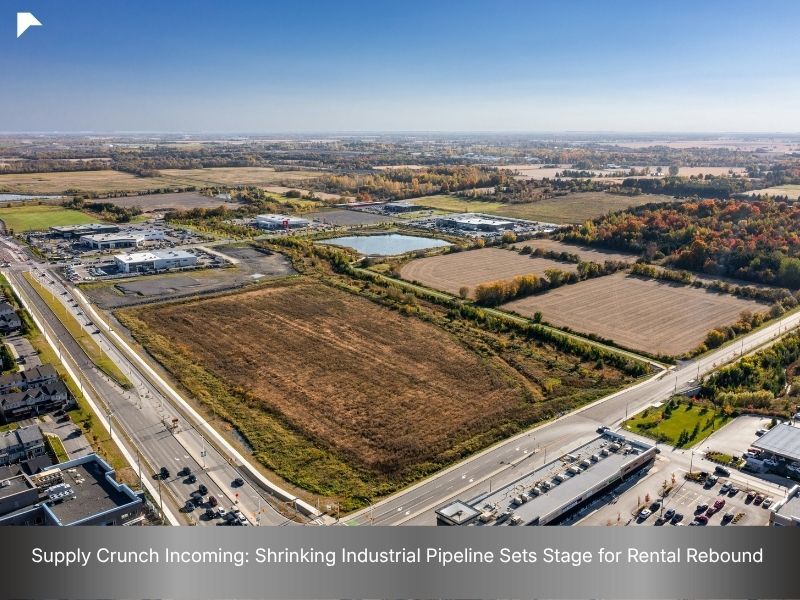
New industrial completions are forecast to fall a further 20% this year after a 19% decline in 2025.
The resulting two-year supply correction is expected to drive renewed rental growth across key east coast markets.
Knight Frank Research & Consulting Partner (QLD) Jennelle Wilson said the rapid contraction in the development pipeline is shifting the market back in favour of landlords.
“As new supply tapers off through 2026, existing vacancy - particularly speculative space - is expected to be absorbed relatively quickly,” Ms Wilson said.
“The tightening supply-demand balance is likely to support a renewed phase of rental growth across the east coast.”
Development Pipeline Retreats
The scale of the pullback is significant. Total new east coast industrial supply fell to 2.1 million square metres in 2025; and Knight Frank forecasts just 1.66 million square metres will be delivered this year.
Speculative development has led the retreat, with completions forecast at around 700,000 square metres in 2026 - down from more than one million square metres in 2025.Speculative space now accounts for just 30% of vacancy - well below the levels recorded when development activity peaked in 2023.
Pre-committed development is expected to account for almost half of all new supply in 2026, reflecting a broader shift to caution across the sector. “Developers have become more cautious as feasibility hurdles have risen, including higherconstruction costs, financing pressures and softer leasing conditions,” Ms Wilson said.
“As a result, we’re seeing more projects delayed and a stronger preference for pre-commitments before construction proceeds.”
Sydney Tightest, Brisbane Leads on Rent
Sydney continues to record the lowest industrial vacancy rate on the east coast at 2.9%. Melbourne and Brisbane both posted vacancy rates of 4.5%, though conditions diverge sharply by precinct in each city.
Areas with the heaviest recent construction are offering the most available space, while tighter submarkets continue to support stronger leasing terms.
Brisbane is the standout on rental growth, recording the strongest annual prime effective rent increase of the three cities at 9.2%.
“Brisbane is benefiting from a combination of strong underlying demand and a rapidly thinning pipeline, but the key differentiator right now is incentives,” Ms Wilson said.
“With incentives stabilising, and in some cases declining, more of that face rental growth is flowing through to effective rents.”
Demand Eases, Structural Drivers Hold
Tenant demand softened in early 2026, although overall leasing activity remains solid against longer-term trends.
East coast industrial take-up totalled 602,000 square metres in the first quarter, 21% below the five-year quarterly average. Looking ahead, Ms Wilson said the sector faces a more uncertain macro backdrop but remains fundamentally well positioned.“Geopolitical uncertainty and tighter financial conditions are likely to weigh on near-term business sentiment and consumption, which may temper leasing activity,” she said.
“However, the industrial sector remains well supported by structural drivers such as e-commerce, supply chain reconfiguration and infrastructure investment. These, along with supply constraints, are expected to continue underpinning both occupancy and rental growth.”